What Can I Feed My Baby Salamanders Like to Eat
Correct nutrition and a counterbalanced diet are very of import for the health and wellbeing of a Salamander.
A common misconception is that this amphibian should be fed every day.
Adults only need to be fed twice a week.
They should be fed a carnivorous diet that closely replicates what they eat in the wild (e.chiliad. insects and minor invertebrates). However, their verbal diet depends on their historic period, species and natural surroundings.
When preparing your Salamander's diet remember to vary what you feed and always cut into very small-scale pieces.
To learn more than about how to properly feed your salamander bank check out the rest of our article below…
Table of Contents
- What Practise Salamanders Eat?
- What Fruits and Vegetables Can Salamanders Eat?
- Commercial Food
- Supplements
- Salamander Diet
- Adult Diet
- Baby Nutrition
- Common Feeding Mistakes
- What Can't Salamanders Eat?
- Summary
What Do Salamanders Eat?
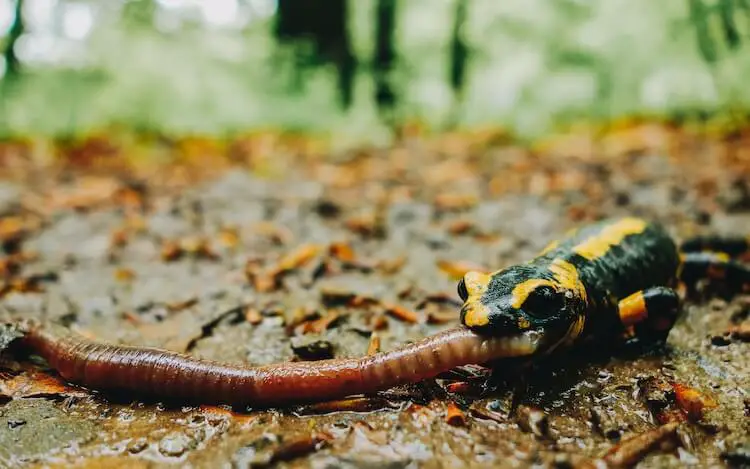
Salamanders are carnivores that swallow a variety of insects and small-scale invertebrates. They are vivacious eaters and are rarely picky about what they eat.
They are nocturnal amphibians that come out from their hiding spots at night to hunt for prey. Their natural habitat influences their diet, availability of prey and how often they eat. Most adults will eat once every two or iii days.
A Salamander's diet is mostly influenced by their species.
Salamanders are amphibians that can be divided into two distinct types:
- Aquatic
- Terrestrial
The terrestrial species has a sticky muscular tongue.
They employ their tongue every bit a tool to catch a wide variety of prey including worms, flies, beetles, and grasshoppers.
Aquatic species don't accept gummy muscular tongues and are more reliant on their teeth to grab food. They swallow organisms that are easier to catch such every bit worms, snails, and shrimp.
Unlike their terrestrial cousins, many aquatic species are omnivores (i.e. non but carnivorous). They will occasionally snack on algae and other plants constitute in their environment.
Larger species accept been known to eat frogs, mice, and are sometimes cannibalistic.
| Terrestrial | Aquatic |
|---|---|
| A mixture of mealworms | A mixture of brine shrimp |
| Crickets | Minnows |
| Snails | Chopped blood worms |
| Diversity of worms | Chopped night crawlers |
In captivity their natural feeding pattern should be replicated by using a consistent feeding schedule.
You should feed an adult once every two to three days.
Considering juveniles are growing and frequently molting they volition need to be fed every day. In captivity, there is an assortment of insects and other invertebrates that can be purchased to feed to them.
What Fruits and Vegetables Can Salamanders Eat?
They should not exist fed any fruits or vegetables. Think, they are carnivorous.
Fruits and vegetables are not a normal role of their nutrition in the wild.
Their digestive tracts cannot effectively process anything other than meat because they are cannibal.
If fruits and vegetables are added to your salamander's diet they will more than likely ignore them. The foods will then spoil and potentially expose your exotic pet to various pathogenic leaner.
The best fashion for your pet to get the correct nutrients from fruits and vegetables is to utilise those food items to gut load insects that you feed them (there is more on gut loading below).
Commercial Nutrient
There are a multifariousness of nutritionally counterbalanced pelleted diets available that are fabricated from a variety of insects.
Despite existence healthy to feed occasionally, you should not rely on these diets exclusively.
In captivity you should allow your amphibian to comport out natural hunting behaviors. They will quickly become bored of hunting commercial pellets. So you should only use a commercial diet to supplement your salamander's diet.
Before feeding cheque the ingredients of the pellets to ensure it just contains nutrient items from our safe listing below.
Some captive species will refuse to eat a pellet-based diet from the commencement.
In addition to commercial diets it is possible to buy insects freeze dried instead of live.
Although, about freeze-dried insects aren't every bit nutritious as live insects and some are not gut loaded.
Like commercial pellets, freeze-dried insects tin can still be included in their nutrition but should only be used occasionally.
Supplements
The only necessary supplement for salamanders is calcium powder. Yous should use calcium powder twice a calendar week (i.e. each time yous feed them).
If you lot decide to utilise a calcium supplement make sure it doesn't include vitamin D3.
Vitamin D3 can be toxic at high levels for them then make certain the supplement has limited levels – or ideally none.
Multivitamins and other supplements are not necessary.
Information technology is best to not include multivitamins in your salamander's diet as they can be harmful.
Just brand sure yous feed a varied diet of different insects.
Salamander Diet
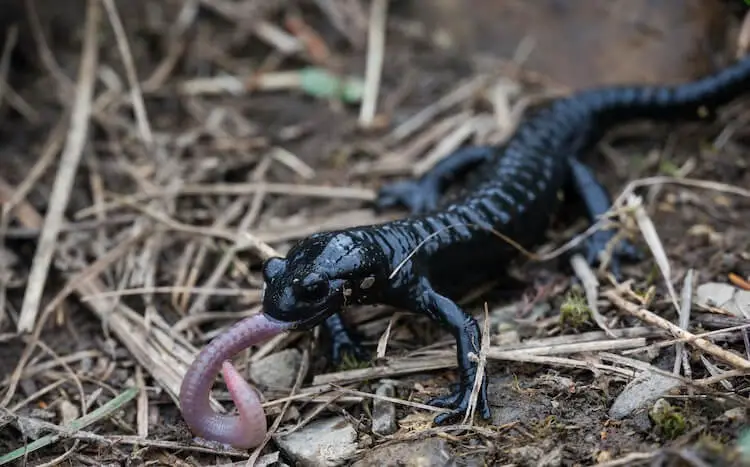
In that location are a diversity of diseases and metabolic conditions that tin affect this amphibian if they practise not receive right husbandry and diets.
Similar almost reptiles kept in captivity, they tin can develop metabolic os affliction if they do not receive proper amounts of calcium.
An inadequate diet will weaken their immune organization and predispose them to many bacterial, fungal, and viral infections.
A Salamander's nutritional requirements vary profoundly throughout their lifetime.
As adults if prey is readily available they will swallow lots and build up a big fat deposit. When food is deficient, or ecology conditions are inhospitable, they will enter periods of dormancy and greatly reduce their nutritional intake. They have been known to live for 10 days without nutrient.
Juveniles demand significantly more nutrients than adults for energy and growth.
Typically aquatic species tend to require more than energy and nutrients than their terrestrial counterparts.
Adult Nutrition
At 2 to three months of age this species should be transitioned to an adult diet.
Adult salamanders should be fed 2 to three times each week.
For salamanders kept in captivity you lot should rotate their nutrition by choosing two food items to feed every other feeding session. This will help to keep your pet happy and salubrious.
Each species prefers specific types of food. You should speak with a breeder to determine which prey items are best for your species.
Below is an example feeding schedule for an aquatic and terrestrial salamander:
| Mean solar day | Aquatic | Terrestrial |
|---|---|---|
| Monday | 2x brine shrimp, 1x inch of bloodworm | 1x mealworm, 2x crickets |
| Tuesday | Fast | |
| Wednesday | Fast | |
| Thursday | Fast | |
| Fri | 1x minnow, 1x inch of night crawler | 1x waxworm, 1x threadworm |
| Sabbatum | Fast | |
| Lord's day | Fast | |
Salamanders accept very small mouths. Worms and other larger food items must be finely chopped before being placed in their enclosure.
Because they are nocturnal they should be fed in the evening or at dusk.
When including live insects into your salamander's diet it is imperative that yous gut-load the insects for a couple of days before feeding.
To exercise this, place sweetness potatoes, apples, and other fruits and vegetables in the insects' enclosure for a few days. Gut loading ensures the insects are full of nutrients before chirapsia eaten.
When kept in captivity, some exotic pets volition become obese. This is a result of being fed likewise many high fat prey options.
Make sure you limit the number of mealworms and other nutrient-dumbo foods y'all feed.
Baby Diet
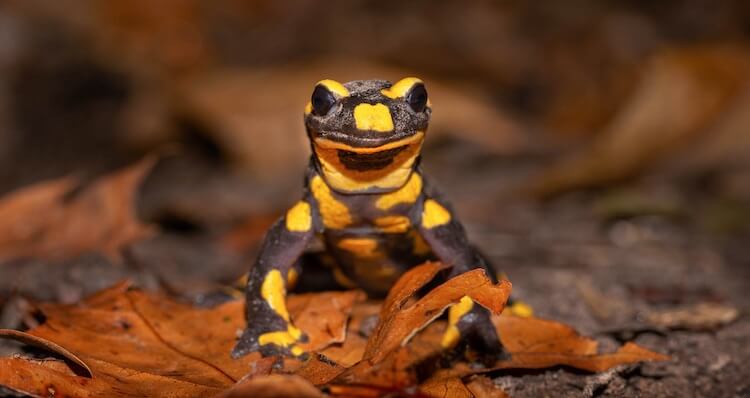
Baby salamanders should have a good for you appetite and readily accept food that is offered to them. If they refuse to eat then alter the insects you are feeding or cut them into fifty-fifty smaller pieces.
After hatching, i of the outset things a babe volition do is eat the remnants of their shell. This is mutual for other reptiles too. A day or 2 later they volition outset eating pocket-sized microorganisms found in water such as plankton.
At two weeks of age they will be large plenty to first consuming larvae of smaller insect species. Mosquito larvae are a favorite snack.
When raising juveniles their diet can consist of:
- Infant alkali shrimp
- Daphnia
- Finely chopped worms
Given their size, hatchlings but demand a very small amount of nutrient per day:
| Mean solar day | Feed |
|---|---|
| Mon | 2x alkali shrimp |
| Tuesday | Multiple daphnia |
| Midweek | 1x inch of chopped earthworm |
| Thursday | 2x brine shrimp |
| Friday | Multiple daphnia |
| Sat | 1x inch of chopped earthworm |
| Sunday | 2x brine shrimp |
Later on a week of regular feeding, gradually increase their meal size and showtime to incorporate other insects and invertebrates. They volition need to be fed every day to sustain their fast growth.
At four weeks of age you can transition to feeding every other day and so ultimately to once every two or three days. It takes hatchlings two months to grow big enough to swallow the aforementioned diet as adults.
If there is excess food in the enclosure after feeding, cutting back on how much you are feeding.
Spoiled food can atomic number 82 to diverse health problems.
Mutual Feeding Mistakes
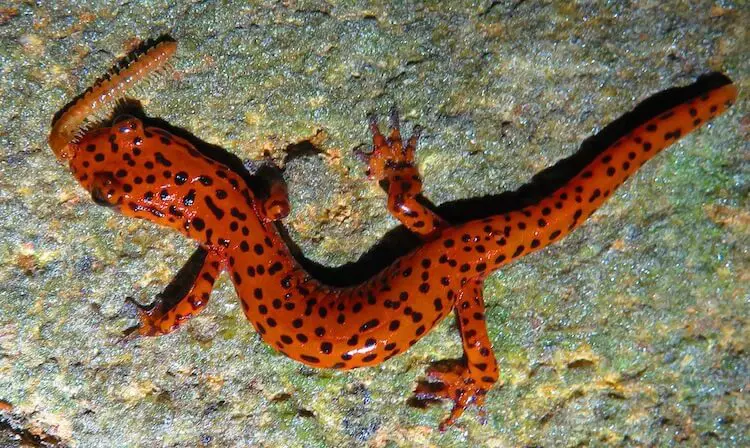
There are iv feeding mistakes that owners commonly brand when feeding:
- A lot of owners rely heavily on one type of food.
This species needs a diverseness of food to ensure that they receive a nutritionally balanced diet. Brand sure you feed unlike foods on different days. This will keep your pet healthy and act as a class of enrichment.
- Beginners often forgot to gut load insects.
Information technology is of import to call up to gut load insects before feeding them. This will ensure your salamander receives proper nutrients.
- Don't rely on a commercial nutrition.
Commercial diets are nutritionally counterbalanced. However, commercial diets do not let salamanders to acquit out their natural hunting behaviors. If you choose to include a commercial nutrition in your feeding routine then supplement information technology with alive casualty.
- Overfeeding is common too.
If you feed an adult more than than three times a week then excess food volition build up in their enclosure and spoiled food will expose your pet to a variety of harmful leaner. Make sure excess nutrient isn't left in the muzzle.
What Can't Salamanders Swallow?
In addition to fruits and vegetables not being heathy for a salamander, you should not feed cherry-red meat, chicken, or large fish. They will negatively affect the good bacteria in their intestine and crusade chronic gastrointestinal bug.
Some insects are toxic to salamanders and should be avoided:
- Fireflies.
- Spiders.
- Ticks.
- Centipedes.
- Millipedes.
Fireflies contain a toxin called lucibufagin which is extremely toxic to reptiles and amphibians. Even ingesting one firefly could kill your salamander.
Chlorine and certain metals in water such as pb and zinc can also be deadly.
Provide them with deionized water or use an amphibian safety water filter to remove toxic substances.
Summary
Terrestrial salamanders have a very different diet than aquatics and enjoy eating worms, flies, beetles, and grasshoppers. Recall each species prefers different insects.
Feeding a suitable diet can be intimidating and overwhelming at showtime.
However, this exotic pet is actually very easy to feed.
Just make sure you provide them with different types of insects, cut the insects into very small pieces and rotate the insects yous feed each meal time.
Don't forget adults only demand to be fed every two or iii days!
If y'all accept any questions or want to share your advice for feeding salamanders and then allow the states know below!
Source: https://www.everythingreptiles.com/what-do-salamanders-eat/
0 Response to "What Can I Feed My Baby Salamanders Like to Eat"
Enviar um comentário